Table Saw Stock Guide: A Comprehensive Guide (Updated 03/16/2026)
Today’s date is 03/16/2026 04:54:25. This guide details building a table saw, starting with a coffee table project, utilizing extruded aluminum fences and front/rear guide rails for precision.
Table saw stock guides are crucial components for achieving accurate, parallel cuts and enhancing overall safety during woodworking operations. Initially conceived during a project evolving from a coffee table to a workbench, and ultimately a table saw itself, the need for precision became paramount. These guides, often constructed from extruded aluminum, work in tandem with front and rear rails to maintain fence parallelism.
Proper alignment, verified with blade-to-fence indicators, is essential. Maintaining approximately 31mm of clearance prevents fence drag, ensuring smooth operation. This introduction sets the stage for a comprehensive exploration of stock guide systems and techniques.
Why Use Stock Guides? (Parallel Cuts & Safety)
Stock guides are indispensable for consistently producing parallel cuts, a fundamental requirement in woodworking. The project’s evolution – from coffee table to workbench to table saw – highlighted this need. They minimize the risk of blade deflection, ensuring accurate results, especially with wider stock.
Beyond accuracy, stock guides significantly enhance safety by reducing the chance of workpiece binding and potential kickback. Maintaining a consistent 31mm clearance prevents fence drag, contributing to a safer cutting experience and overall control.
Types of Table Saw Stock Guides
Table saw stock guides broadly fall into two categories: fence-mounted and independent. Fence-mounted guides integrate directly with the saw fence, offering a streamlined setup. Independent guides, like the Jessem TS Stock Guides, operate separately, providing enhanced adjustability and compatibility with various fence systems.
The choice depends on your existing setup and desired level of precision. Systems like the Biesemeyer fence often pair well with standard T-square guides, while Jessem offers specialized guides for their VerySuperCool Tools fence system.

Fence-Mounted Stock Guides
Fence-mounted stock guides are designed to integrate seamlessly with your table saw’s existing fence. These guides typically utilize a T-square design, sliding along the fence to maintain precise 90-degree angles for accurate cuts. They are particularly effective when used with Biesemeyer-style fences and guide rail systems.
These systems offer a convenient and often cost-effective solution for achieving parallel cuts, though their adjustability may be limited compared to independent options.

Independent Stock Guides (e.g., Jessem TS Stock Guides)
Independent stock guides, like the Jessem TS Stock Guides, offer a versatile solution, functioning separately from the table saw fence. They integrate well with T-squares and extrusions, providing enhanced control and accuracy. Jessem Tools even creates customized guides specifically for certain tablesaw fence systems.
These guides are beneficial for users seeking greater adjustability and precision, often exceeding the capabilities of fence-mounted alternatives.
Fence Design & Materials
Fence construction often centers around extruded aluminum, prized for its rigidity and dimensional stability. Careful consideration must be given to the fence rail system, employing both front and rear rails to guarantee parallelism during cuts. This dual-rail approach minimizes deflection and ensures consistent results.
The design aims for a top thickness allowing approximately 31mm of clearance, preventing fence drag while maintaining stability.
Extruded Aluminum Fences: Advantages & Considerations
Extruded aluminum offers significant advantages for table saw fences, including exceptional straightness and resistance to bending under pressure. This material’s inherent stability contributes to more accurate cuts. However, proper mounting is crucial; the fence rail system must securely support the extrusion’s length.
Considerations include ensuring adequate clearance – around 31mm – to avoid fence drag during operation, impacting cut quality and safety.
Fence Rail Systems: Front & Rear Rails for Parallelism
Employing both front and rear rails is a key strategy for maintaining fence parallelism with the blade, crucial for accurate cuts. Older Delta saws utilized this round tube design, demanding precise length matching for optimal function. Dual rails minimize deflection and wobble.
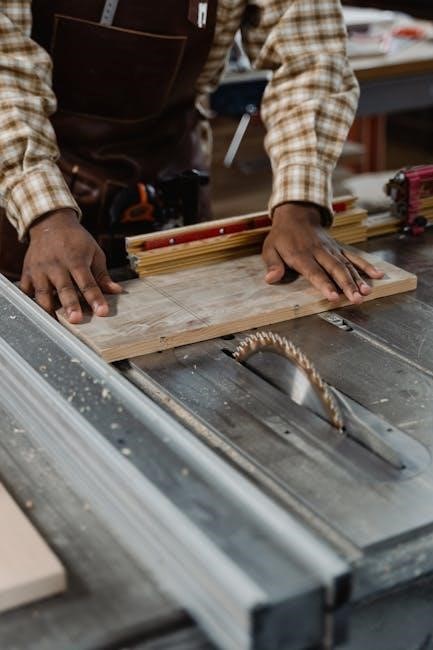
This setup ensures the fence remains consistently aligned throughout its travel, enhancing precision and reducing the risk of binding or inaccurate results during operation.

Understanding Fence Alignment
Accurate fence alignment is paramount for safe and precise table saw operation. Utilizing an indicator to check blade-to-fence parallelism is essential; any deviation impacts cut accuracy. Maintaining approximately 31mm of clearance between the fence and the table top is ideal.
Less than this – around 1-2mm – risks fence drag, hindering smooth operation and potentially causing kickback. Regular checks and adjustments are vital for consistent results.
Checking Blade-to-Fence Parallelism (Indicators & Methods)
Precisely verifying blade-to-fence parallelism is crucial for accurate cuts. Employing a dedicated indicator allows for quick assessment of any misalignment. Methods include measuring from the blade to the fence at both the front and rear of the table.
Consistent readings across both points confirm parallelism. Any discrepancy necessitates fence adjustment to ensure cuts remain square and true, maximizing safety and precision during operation.
Addressing Fence Drag (Top Thickness & Clearance ⏤ ~31mm ideal)
Fence drag significantly impacts cutting accuracy and can cause kickback. Maintaining approximately 31mm of clearance between the fence and the table top is ideal. Insufficient space leads to friction, hindering smooth fence movement.
Avoid reducing this clearance below 1-2mm, as it exacerbates drag. Proper top thickness is vital; a vintage Unisaw’s top may require reassessment for accessory mounting, like a Big Eye, due to clearance limitations.
Popular Stock Guide Systems
Biesemeyer fences offer excellent compatibility with guide rail systems, providing a robust and accurate setup for parallel cuts. If already utilizing a Biesemeyer-style system, the Standard T-square is a highly recommended stock guide option.
JESSEM TS Stock Guides integrate seamlessly with T-squares and extrusions, offering customized solutions. Jessem Tools even creates TS Stock Guides specifically designed for VerySuperCool Tools tablesaw fence systems, enhancing precision and stability.
Biesemeyer Fence & Guide Rail Compatibility
Biesemeyer fences are renowned for their precision and durability, making them a popular choice among woodworkers. Their compatibility with various guide rail systems ensures consistently parallel cuts, crucial for accurate woodworking projects. Utilizing a Biesemeyer setup often simplifies achieving professional-quality results.
The Standard T-square is particularly well-suited for use with Biesemeyer fences, offering a straightforward and effective method for maintaining fence alignment during operation.
JESSEM TS Stock Guides: Integration with T-Squares & Extrusions
JESSEM TS Stock Guides seamlessly integrate with both T-squares and extrusions, providing a robust and accurate solution for maintaining fence alignment. These guides are specifically designed to work with VerySuperCool Tools tablesaw fence systems, offering customized options for optimal performance.
This compatibility allows woodworkers to achieve exceptionally straight and parallel cuts, enhancing the precision of their projects. The system’s design prioritizes stability and ease of use.
T-Square Stock Guides: Best Options
For those already utilizing a Biesemeyer fence or a Biesemeyer-style guide rail system, the Standard T-square emerges as the premier choice for stock guidance. Its design complements these existing setups, offering a straightforward upgrade path to improved cutting accuracy and control;
T-square guides provide a reliable method for ensuring parallel cuts, enhancing overall woodworking precision and efficiency. They are a cost-effective solution for many setups.
Outfeed Support & Folding Extensions
Integrating outfeed tables is crucial for supporting longer stock during cuts, preventing deflection and ensuring straight results. A folding extension offers space-saving convenience when not in use, maximizing workshop flexibility. This addition transforms the table saw’s capabilities, allowing for efficient handling of larger projects.
The current project includes adding an outfeed section that conveniently folds out, enhancing usability without permanent space commitment.
Integrating Outfeed Tables for Longer Cuts
Outfeed tables significantly improve cut accuracy when working with lengthy materials. They provide essential support, minimizing sag and ensuring the workpiece remains level throughout the cutting process. This is particularly vital for sheet goods like plywood, preventing binding and achieving clean, straight edges.
Adding a folding outfeed section, as planned, offers a practical solution for both extended support and space conservation within the workshop environment.
Cast Iron Table Top Thickness Considerations
Cast iron table top thickness is crucial for accessory mounting and overall stability. A thicker top provides a more robust platform, reducing vibration and improving cut quality. Concerns arose regarding a vintage Unisaw’s top thickness and compatibility with the “Big Eye” accessory.
Maintaining approximately 31mm clearance from the top to the fence is ideal, preventing drag; reducing this clearance too much can cause operational issues.
Impact of Top Thickness on Accessory Mounting (e.g., Big Eye)
Table top thickness directly affects the ability to securely mount accessories like the “Big Eye” dust port. A thinner cast iron top might lack sufficient material for a stable and reliable attachment, potentially compromising functionality.
Users questioned whether their vintage Unisaw’s top was thick enough for the “Big Eye,” prompting a re-evaluation of mounting options. Adequate thickness ensures proper accessory integration and performance.
DIY Stock Guide Construction
Constructing custom stock guides from aluminum extrusion offers a cost-effective alternative to pre-built systems. This approach allows for tailored solutions, adapting to specific table saw dimensions and user preferences. Careful planning and precise cuts are crucial for achieving parallelism.
Building guides involves sourcing appropriate extrusion profiles and hardware, ensuring compatibility with the existing fence and table. This DIY route empowers woodworkers to create a highly functional setup.
Building Custom Guides from Aluminum Extrusion
Creating guides from aluminum extrusion demands precise measurements and careful assembly. Begin by selecting suitable extrusion profiles, considering strength and compatibility with mounting hardware. Accurate cuts are paramount, ensuring the guides remain perfectly parallel to the blade.
Securely attach the extrusion to the table saw using appropriate fasteners, maintaining a consistent gap for smooth fence travel. This DIY method offers customization and cost savings, yielding a functional stock guide system.
Troubleshooting Common Stock Guide Issues
Addressing fence movement during cuts requires tightening mounting hardware and verifying the guide rails are securely fastened. Inaccurate cuts, despite guides, often stem from blade-to-fence misalignment; re-check parallelism with an indicator.
Ensure adequate clearance – around 31mm is ideal – to prevent fence drag. If issues persist, inspect for debris or damage to the guide rails and meticulously re-align the entire system for optimal performance.
Addressing Fence Movement During Cuts
Fence movement often indicates loose mounting hardware. Thoroughly tighten all bolts securing the fence and guide rails to the table. Verify the rails themselves are firmly attached and haven’t shifted during previous operations.
Inspect for any play or wobble in the fence’s connection points. A stable foundation is crucial; ensure the table saw itself isn’t vibrating excessively during use, as this can contribute to movement.
Dealing with Inaccurate Cuts Despite Guides

Inaccurate cuts with guides present often stem from blade-to-fence misalignment. Re-check parallelism using a reliable indicator; even slight deviations cause errors. Ensure adequate clearance – approximately 31mm – between the fence and blade to prevent drag.
Inspect the guide rails for damage or warping. Confirm the outfeed support is stable and doesn’t introduce unintended angles. Consider featherboards to maintain consistent pressure against the fence.
Stock Guide Maintenance & Care
Regular maintenance ensures smooth operation and accuracy of your stock guides. Cleaning is crucial; remove sawdust and debris frequently to prevent binding. Lubricate guide rails and fence surfaces periodically with a dry lubricant – avoid oils that attract dust.
Inspect rails for damage and tighten any loose mounting hardware. Check fence alignment regularly and address any drift promptly. Proper care extends the lifespan and performance of your system.
Cleaning and Lubrication for Smooth Operation
Maintaining a clean and lubricated stock guide system is paramount for precision. Regularly remove accumulated sawdust and wood particles from the rails and fence surfaces using a vacuum or brush. Avoid compressed air, which can drive debris into mechanisms.
Apply a dry lubricant, like silicone spray or PTFE, to the rails to minimize friction. Do not use oil-based lubricants, as they attract dust. Consistent cleaning and lubrication ensure smooth gliding and accurate cuts.
Advanced Stock Guide Techniques
Elevate your precision with combined techniques. Utilizing featherboards alongside stock guides provides consistent pressure, minimizing tear-out and ensuring a cleaner cut, especially on wider stock. Experiment with different featherboard placements to optimize control.
Consider incorporating a sacrificial fence face for particularly demanding cuts. This protects your primary fence and reduces the risk of chipping. Mastering these techniques unlocks the full potential of your stock guide system.
Using Featherboards in Conjunction with Stock Guides
Synergistic support for superior cuts. Featherboards, when paired with stock guides, deliver consistent workpiece pressure against the fence, minimizing movement and enhancing cut accuracy. Position featherboards strategically – both before and after the blade – to control both vertical and horizontal forces.
Experiment with different featherboard styles (bi-metal, nylon) to suit the material being cut. Proper adjustment is crucial; avoid excessive pressure that could bind the workpiece.
Table Saw Safety with Stock Guides
Prioritize safe operation with every cut. Maintaining proper hand positioning is paramount; never place hands directly in the blade’s path. Stock guides enhance safety by reducing the risk of workpiece deflection and potential kickback. Always use push sticks or blocks, especially when ripping narrow stock.
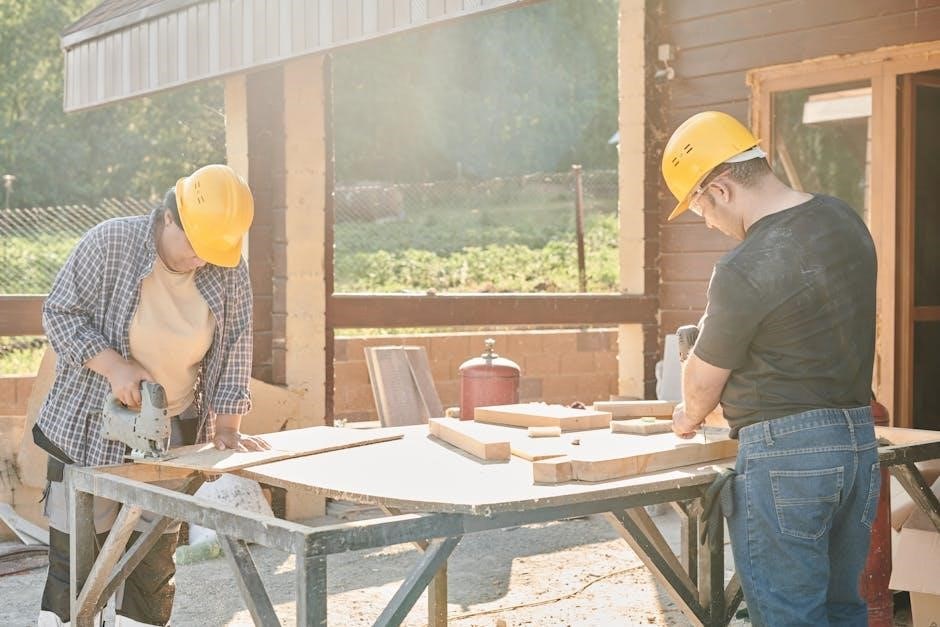
Ensure the guides are securely fastened and functioning correctly before initiating any cut. Awareness and focused attention are key to preventing accidents.
Proper Hand Positioning & Avoiding Kickback
Maintain a secure grip and controlled feed rate. Never reach over or behind the blade. Keep hands well clear of the cutting path, utilizing push sticks or blocks for smaller pieces. A firm stance and balanced posture are crucial for control.
Kickback occurs when the workpiece binds and is thrown back towards the operator; stock guides minimize this risk by maintaining parallel alignment and preventing binding.
Cost Comparison: Stock Guide Options
Budget-friendly options often involve DIY solutions using aluminum extrusion, potentially costing under $100 for materials. These require fabrication skills but offer customization. Premium systems, like JESSEM TS Stock Guides or Biesemeyer setups, range from $200 to $500+.
The price reflects precision, ease of installation, and integrated features. Consider your skill level, desired accuracy, and long-term investment when choosing a system.
Budget-Friendly vs. Premium Systems
Budget systems, often DIY with aluminum extrusion, prioritize affordability, typically under $100, but demand fabrication expertise. Premium systems, like JESSEM or Biesemeyer, range from $200-$500+, offering superior precision and ease of use.
The trade-off lies in convenience versus cost. Premium options integrate seamlessly, while budget builds require more effort. Evaluate your skill level and desired accuracy to make an informed choice.
Future Trends in Table Saw Stock Guides
Innovations in guide rail technology are focusing on enhanced locking mechanisms and micro-adjustments for unparalleled parallelism. Expect to see more integrated systems with digital indicators providing real-time feedback on fence alignment.
Material science will likely introduce lighter, yet stronger, alloys for guide rails. Furthermore, advancements in quick-release systems will streamline setup and adjustments, boosting efficiency and precision for woodworkers.
Innovations in Guide Rail Technology
Current trends prioritize enhanced locking mechanisms, ensuring steadfast fence stability during demanding cuts. Micro-adjustment features are gaining prominence, allowing for incredibly precise parallelism refinement. Digital indicators, offering real-time alignment feedback, represent a significant leap forward.
Expect future rails to incorporate self-aligning properties and potentially utilize magnetic levitation for frictionless movement, minimizing drag and maximizing accuracy. These advancements aim to elevate woodworking precision.
Resources & Further Reading
For detailed table construction insights, explore online woodworking forums dedicated to table saw modifications and DIY builds. Websites specializing in table saw accessories, like JESSEM Tools and VerySuperCool Tools, offer valuable product information and integration guides.
MS Word table formatting issues can be researched on Microsoft’s support pages. Further research into extruded aluminum suppliers will aid fence construction. Remember to consult safety manuals for proper operation.